


5) From Glory To Grind

Updated: Apr 5
Overview

I glowed for two whole weeks after Windermere, before acknowledging I couldn’t bask in the glory forever and needed to get back to reality. I did, however, decide my efforts warranted the first baby step into Channel waters on my shipping chart.

Only a day after arriving home from The Lakes, I jetted off to Dubai on a work trip (a bit of a whirlwind), and gave myself permission to not feel pressured to run, swim or workout while there (under the banner of ‘rest and recover’). What luxury!
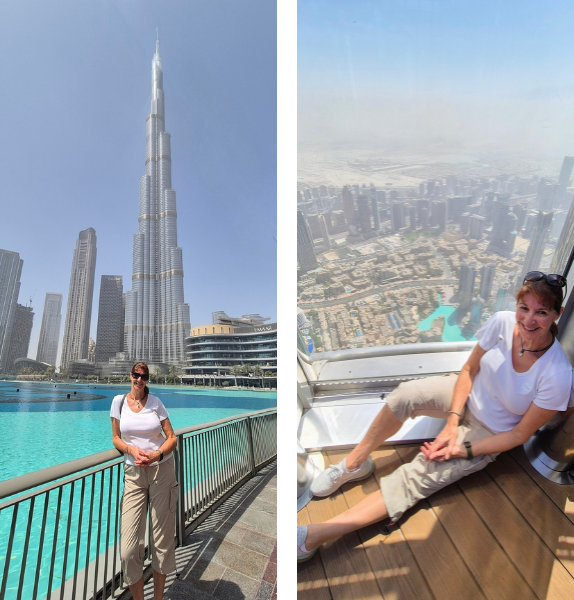
Once home, I started gently; a short run, a mini-workout and a few laps of the pool. Nothing major. By the following week, it was back to a loose schedule. I wasn’t sure what that schedule should be, but I figured the winter months must be about strength, technique and speed.
I contacted my soon-to-be coach, Emma, and we decided I’d officially start with her in January. Meanwhile, I booked a second stroke assessment with Steve Wadey as a follow up to the breaststroke analysis I had in July, this time to work on my front crawl. I need to build stamina for my crawl so I can use it if and when required, so I might as well get the technique perfected first!
October 2025

While many hard-core OW swimmers don’t like pools - or the idea of them - they’re actually quite useful for specific training drills. So it’s less about distance for the next few months and more about technique and speed.

I have some sets to work on in the pool and I’m still going to my local lakes a couple of times a week to keep up cold water exposure. It’s a good time of year to work on the cold issue. I know I’m much better off spending 10 minutes in the lake in swimsuit only than I am spending an hour in a wetsuit (which I know I can do). But gosh, that 10 minutes feels long!
With the clocks back an hour evening lake swims are colder (9-10°) and darker. It’s eerie swimming towards silhouetted reeds on the bank, yet having no concept of distance due to the black water in between. I’d no idea if I was about to swim into them or whether there was still some way to go.
A very rare and special experience one evening, was finding myself in the middle of a starling murmuration. I heard them before I saw them; 200-300 starlings flying low across the surface of the lake, coming from the opposite end straight towards me at speed. I let out a squeal of shock as the whoosh of their wings, loud 'chatter' and black 'cloud' formation missed my head by 6 inches. I part looked up at them right above me in awe, and part ducked under water in fear of them smashing into my head. Incredible!

November 2025

Stroke Assessment
On 8th November I visited technique coach Steve Wadey again. I‘ve been working on the breaststroke tips he gave me in July (most of which vanished during Windermere!). So I needed a follow up on that, plus some tips on front crawl.

While I anticipate my big swim will be mostly (if not all) breaststroke, I want to improve my crawl, should I need to switch stroke for limb/joint relief or speed. Hours of repetitive movement can play havoc with arms and legs, so some crawl might be good to stretch my shoulders and give my knees a break. As for speed, boat pilots often ask swimmers to speed up for 30 minutes/an hour/two... to break through the tide or get across the shipping lane swiftly. So my front crawl needs tightening up.
Breaststroke
Breaststroke is a 3-stage stroke: Kick/Glide/Pull. Generally, people don’t glide nearly long enough, but it’s a really important element of the stroke. The glide is powered by a strong kick, making full use of its force while conserving energy before the next arm pull. If the glide is too short, you waste energy on an unnecessary arm stroke; too long and you start to lose swim power and speed.
Steve’s breaststroke tweaks for me in July:
Keep head horizontal - look straight down (not forward 45°) to reduce drag.
Head/shoulder/hips should be aligned, flat and streamlined during the glide.
Keep head higher so it’s half out the water. My head was totally submerged, making it further to travel when coming up to breathe.
Don’t cut the kick short. Complete it by ensuring feet meet at the back. (I’ve been working on feeling my ankles touch).
When shooting arms forward, ensure arms/elbows are completely straight, close to my head (almost touching ears) during the glide.
I’m told my kick is strong and my glide is good.
Steve’s further breaststroke tweaks for me this visit:
Open arms to a ‘10 to 2’ width only, before circling inwards. Anything wider doesn’t help the stroke and is wasted energy.
Swivel hands 180° from facing outwards when pushing water away, to inwards when circling back in. Push out slowly; circle in and shoot forward fast.
Keep chin tucked in as if holding a tennis ball, so when breathing, come up by the shoulders, not the neck; maintain alignment.
Front Crawl
Front Crawl is a 5-stage stroke: Entry/Catch/Pull/Finish/Recovery:
1. Entry: Arm straight in front (don’t cross the invisible middle line), entering the water with a straight hand (middle finger first) which helps a good catch.
2. Catch: (This was new to me). As the hand enters the water, don’t circle arms like windmill sails(!); instead, keep a high/bent elbow position to ‘catch’ the water with your forearm and create early propulsion (imagine rolling your arm round a beach ball).

3. Pull: Pull the arm straight back to move the water directly behind you.
4. Finish: Keep pulling until your hand is level with your thigh. People often lift arms out when they get level with their waist, underutilising their stroke.
5. Recovery: Getting the arm out the water and back to the front, aided by the momentum of a good ‘finish’, ready for a straight hand entry again.
Steve’s front crawl tweaks for me:
Legs closer together, feet pointed slightly inwards, so big toes almost touch.
As I’m hypermobile, what feels like straight arms to me, isn’t. So during ‘entry’ I need to consciously turn elbows outward (not bend them) to make my arms actually straight, which in turn, helps body rotation.
Keep elbows high during the catch - yes yes yes, I know...
Finish the stroke. Imagine marker pens in place of thumbs and draw a line on your thigh before lifting arms up/out. I’d already worked on this a little, but obviously not enough!
Hmm, lots to practice...
The rest of November didn’t exactly go to plan. We sadly and very unexpectedly lost our African rescue kitty, Smudge, and the emotional toll the week before and after took all the stuffing out of me. All forms of training fell by the wayside; in fact I lost all interest in the Channel entirely, and straight after that I came down with a shocking cold. So in the end I decided to write November off. Someone fast forward to December!


Comments